Training the agencies

Our next update comes from Martin Webber, who tells us a little bit about the process of training the agencies ready for their part in the pilot study.  We are currently in the midst of this training process and over the last week the team have been from Lincoln to Derby to Kent to Somerset to back home in London to deliver the training to the participating agencies…phew!

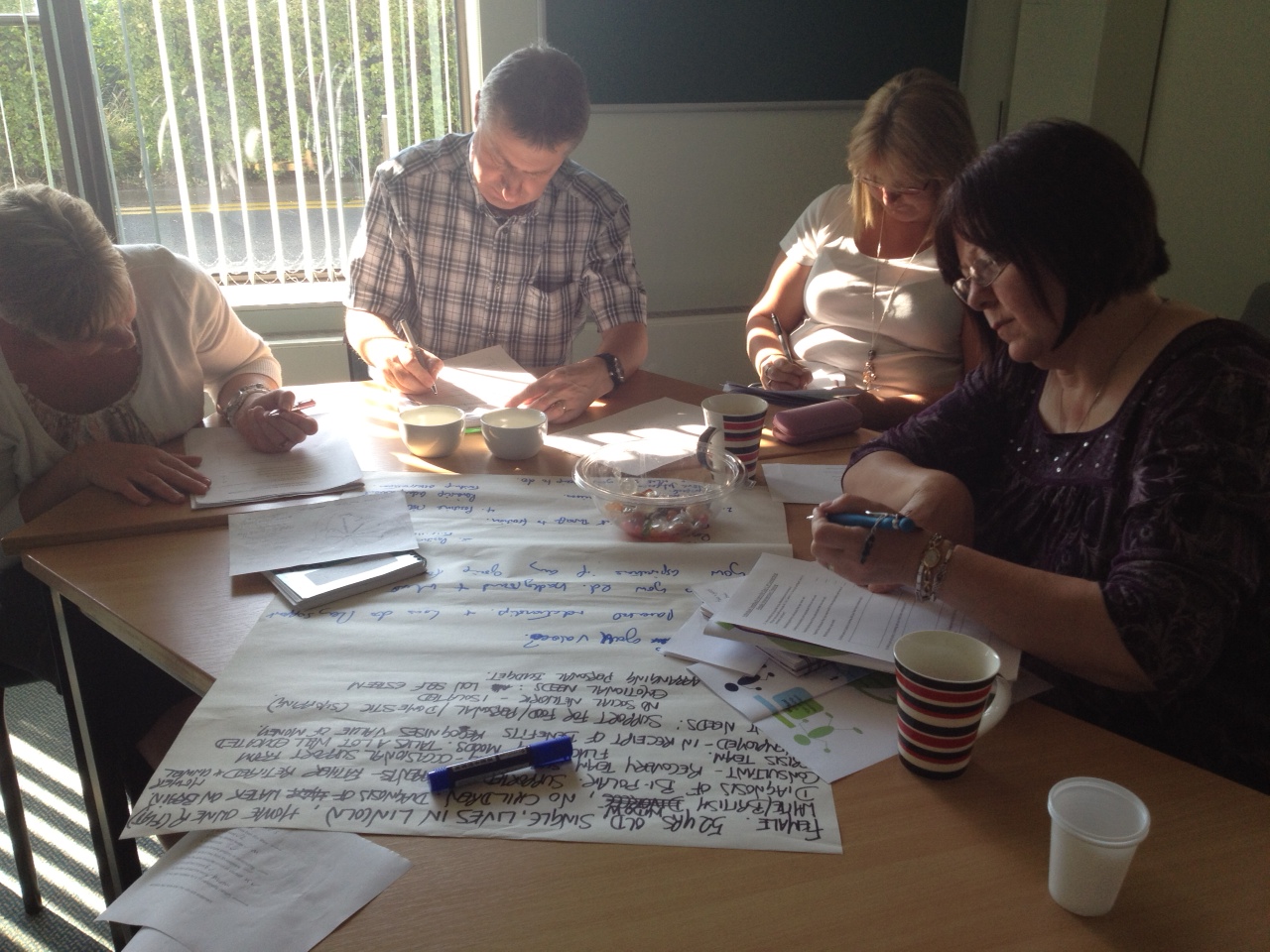
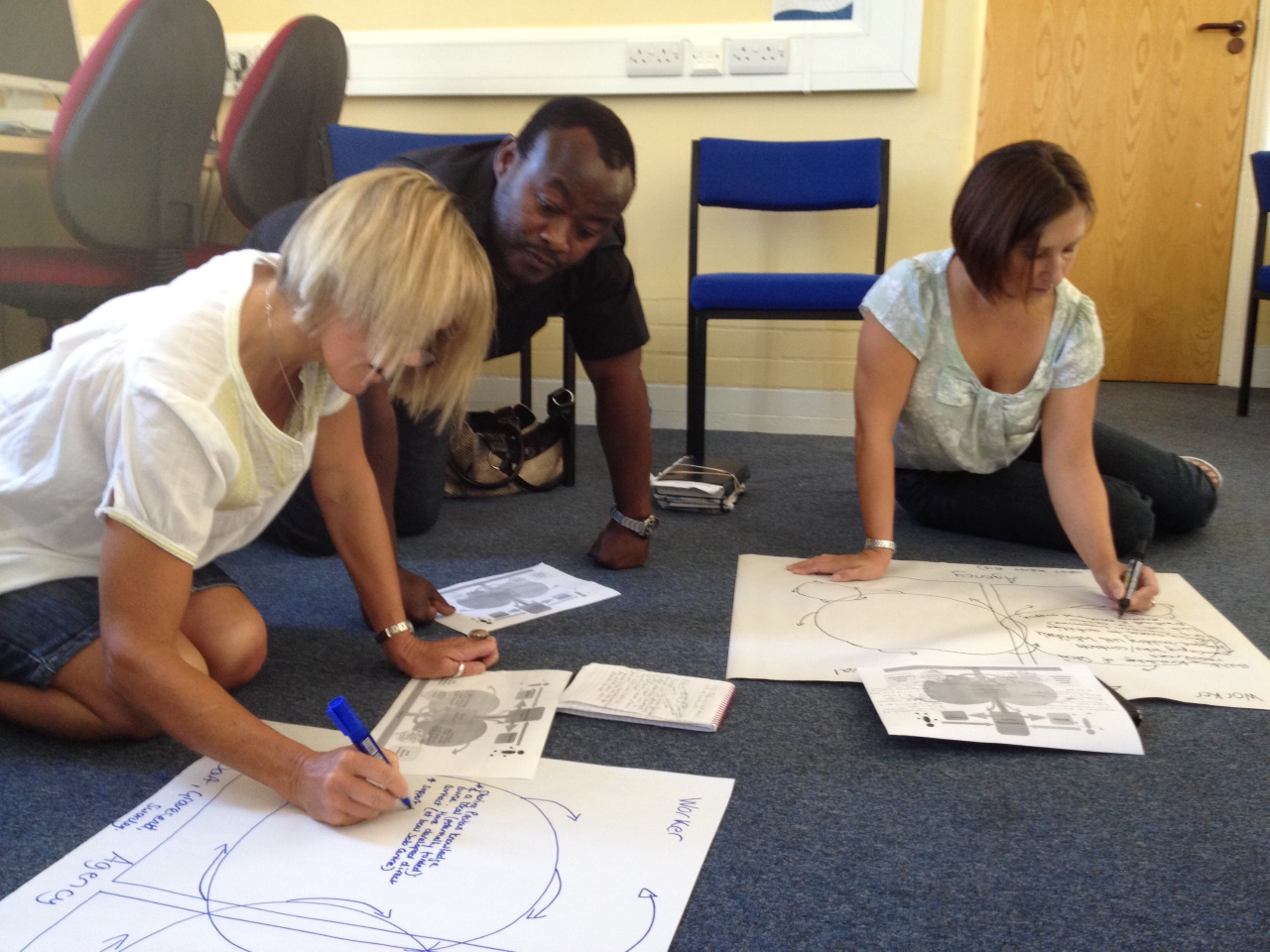
Training session in progress

“We have recruited 15 agencies so far to pilot the Connecting People Intervention, with a couple more in the pipeline. These vary from small third sector social enterprises to large NHS Mental Health Trusts. We have a good mixture of urban and rural sites and most regions of England are represented in the study. The multiple contexts we are piloting the intervention in will help us to find out more about where it can be implemented most effectively and produce the best outcome for people using their services.

Training session in progress

The intervention will be piloted by a variety of workers including social workers, community psychiatric nurses, occupational therapists, community development workers and support time and recovery workers. Screening questionnaires suggest that workers and teams vary in their confidence in with working with people in the way articulated in the Connecting People Intervention model. We hope to see an improvement in their confidence following the training and support provided throughout the study. There are some signs of this happening already as we travel around the country to undertake the training.”

The wider reaches of the study…

To kick off our week of updates, David Morris talks a little about the ways in which the Connecting People research has an impact beyond just the study itself…

Connecting People is important not just for the outcomes of the study itself but for the ways in which the practices with which it works and the emerging messages from how to implement the model in practice are beginning to be felt elsewhere. We know that there are many teams who are not part of the study but whose members are very actively involved in creative approaches to supporting community connections for the individuals with whom they work. An important aspect of our study is generating wider reach; helping to illuminate this work in its richness and the ideas behind it.

At the same time, through our roles beyond the study, Connecting People is linking with other programmes like Connected Communities, a programme of work between UCLan and the RSA (together with LSE) and Inclusion Health, the national programme to address health inequalities and their social determinants in a number of particularly disadvantaged communities. We aim to continue building these links; to identify connections and to ensure that Connecting People reaches far beyond the areas in which we are currently working!

A week of updates…

It’s the end of summer and the Connecting People team are feeling relaxed and refreshed, not to mention sporty due to all of the Olympics that we have been watching.  We are raring to continue moving forward with the next stages of the project.

Each team member has been working on different aspects of the project over the summer.  Over the next week we will be updating you on these different aspects of the study to give you an idea of where we are up to, and what we are planning to do next.

Enjoy!

The training so far…

The Connecting People Study team have now trained 6 agencies on how to use the intervention in their daily practice.  Workers from all levels of seniority attended from the agencies, which allowed the intervention to be understood from both a practical and a more logistical perspective.  We hope that this will aid the dissemination of the intervention and training of other workers within the agencies as time goes on.

The agencies involved so far have been BlueSCI, Start Again Project, Grapevine, Waltham Forest 247 Markham Road, Waltham Forest CDS, and Wandsworth SCART.  Each training lasted for either 2 or 3 days, and shared a similar ‘core’ first day, during which the intervention model was described and explained fully and each agency’s existing practice was aligned with the principles of the intervention.  Activities also included a social network mapping exercise and some discussions on boundaries and barriers.  These activities were picked to give a good base of knowledge surrounding the intervention, as well as challenging workers to perhaps look at their practice from a new, and more personal perspective.  The ethos of the training and collectively determined guidelines ensured that trainers and workers from all levels of seniority were placed at the same level, allowing more useful communication to be achieved.

One major objective of the first day of training was to establish exactly what the agencies would need to cover over the rest of the sessions.  As the intervention is based on examples of existing good practice, all of the agencies were already strong in several aspects of the model.  This meant that we could really establish where the areas of need were and focus on training these.  It also meant that each agency (or group of agencies where more than one organisation trained together) received bespoke training that was tailored to their own wishes and needs.  Some agencies wanted help with the earlier stages of the intervention – for example building the relationships and trust with an individual, or seeing the assets within the community.  However, we found that most training need centred around the later stages of the intervention.  Agencies often felt that it would be hard to move people onto other activities outside of their service, and there were some concerns about stopping a relationship.  To tackle this we focussed significant amounts of training – where needed – on helping workers with these processes.  We talked about barriers to individuals moving on from an agency, for example complex external lives, and how to deal with this.

We asked those attending training to fill in feedback forms at the end of the first day, and at the end of all of the training.  This included ratings on how confident individuals felt about each aspect of the intervention model.  We used the first day forms alongside the feedback from the groups to guide the development of the subsequent training days.  We have also been looking at the ratings before and after the subsequent training, and have found that for the most part figures have increased for each agency, especially within the areas with lower confidence ratings that the training focussed on.

Although we spent a lot of time working with agencies as individual entities to ensure that the intervention works for them in the future, there was a lot of knowledge sharing between agencies when more than one were being trained together.  On two occasions, we trained agencies working with individuals with mental health problems alongside agencies working with individuals with learning disabilities.  These groups have commonalities in their needs that allowed for useful discussions to be held.  However, the differences between the groups meant that one agency were often able to problem solve for the other.  All agencies that trained with other organisations commented on how useful it was to have this differing point of view and learn from a completely different way of working.

We now have a short break from the training before it picks up in earnest again in September, where we will be training agencies nearly every day.  This will give us time to review the training exercises and refine them accordingly.  In the meantime, if you would like to have a go at one of the training exercises then try the below, where we are asking you to map and consider your social network.  Please give us any feedback that you have on this – hannah.reidy@kcl.ac.uk – we would love to hear from you!

Social network mapping exercise :

Draw a map of your social network, including factors (people) that protect your wellbeing.  This can be constructed in any way that you see fit, use your imagination, or have a look at the examples in the picture below.

  • Find a partner and get them to draw their social network too
  • Take it in turns to describe your network to your partner
  • Suggest another area that your partner could add to their network
  • Discuss whether there are negative influences within your social network and why
  • Talk about the direction of your network connections – what do these connections give to you?
  • What do you give to these connections (what are the assets that you give to your network)?

Questions to consider: look at your networks now through the lens of ‘the worker’. 

  • How many of these individuals are still within your network whilst you are at work – your professional network? 
  • How many of them disappear?
  • How many would you be willing to use to help an individual who you are working with?
  • Consider why you have responded in the way that you have to these questions

The role of the third sector in the Connecting People study

The third sector plays an important role in the Connecting People study. Four of the agencies in the ethnographic study were in the third sector and at least three in the pilot study will be as well.

These agencies have played a crucial role in shaping the intervention model which we are now starting to pilot. Through observations, interviews and focus groups in third sector agencies we gained an insight into practice which appeared effective at facilitating social connections. We have harnessed these insights and integrated them with those gained from the statutory sector to produce the model.

I have written a paper to share case studies of the four agencies whose practice helped us to develop the Connecting People Intervention model. The full text can be downloaded here. If you don’t have the time to read the full paper, or to whet your appetite, the abstract is reproduced below:

The role of the third sector in social capital enhancement and mobilisation: evidence from an ethnographic study

A number of factors including increasing life expectancy, increasing expectation about independence and decreasing institutional care are creating a sustained growth in the need for social care services for adults in England (Care Quality Commission, 2009). In its vision for a ‘Big Society’, the UK Government aims to increase the role of civil society in the provision of public services such as social care (Department of Health, 2010; Her Majesty’s Government, 2010). Communities are to be empowered to develop local arrangements for the care of vulnerable and marginalised people, based on the reciprocal principle of providing and receiving services, facilitated by personal budgets. Integral to its aim of developing strong communities, the Government is committed to enhancing individual and collective well-being (Department of Health, 2011).

There is robust evidence that positive and supportive social relationships are associated with well-being (Aked et al., 2008; Webber et al., 2011). However, vulnerable adults in need of care services are frequently marginalised in communities and have restricted social networks (Catty et al., 2005). Some social care workers help people to build relationships and strengthen their connections with their local community (Huxley et al., 2009), but this is afforded a low priority by many (McConkey & Collins, 2010) in spite of increasing evidence of the importance of social capital for health and well-being (Kawachi et al., 2007). To address this, we are developing a social intervention for social care workers to use in supporting people with mental health problems to develop and enhance their social relationships. This provides training and a ‘toolkit’ of resources for workers in how to work alongside an individual to explore their current social network, identify their goals (such as increasing confidence or meeting new people, for example), and support them to achieve them.

The intervention has been developed from an ethnographic study of practice in health and social care agencies in the third and statutory sectors, and informed by literature and scoping reviews. This paper presents the findings of the Connecting People study, funded by the UK National Institute for Health Research School for Social Care Research, and will highlight the unique contribution of social enterprises, housing associations and other voluntary sector organisations in connecting people with their local communities. We will discuss the main themes emerging from interviews and observations with over 60 workers and 50 service users gathered over a period of twelve months. We will also present the intervention model which emerged from these findings, which dynamically relates the practice of workers to a cycle of change for service users, in the context of outward-facing agencies which are embedded in their local communities.

We will argue in this paper that the third sector is better placed than statutory agencies to support the participation of people with mental health problems, and other vulnerable adults, in their local communities. The Connecting People study found more innovation, flexibility and creativity in the third sector agencies in the project. However, in times of fiscal retrenchment and resource scarcity, the third sector will need to be more innovative than ever to maintain its success, which cannot rely indefinitely on voluntarism.

References

Aked, J., Marks, N., Cordon, C. and Thompson, S. (2008) Five Ways to Wellbeing. A Report Presented to the Foresight Project on Communicating the Evidence Base for Improving People’s Well-Being London: New Economics Foundation.

Care Quality Commission (2009) The State of Health Care and Adult Social Care in England London: The Stationery Office.

Catty, J., Goddard, K., White, S. and Burns, T. (2005) Social networks among users of mental health day care, Social Psychiatry and Psychiatric Epidemiology, 40, 6, 467-474.

Department of Health (2010) A Vision for Adult Social Care: Capable Communities and Active Citizens London: Department of Health.

Department of Health (2011) No Health Without Mental Health: A Cross-Government Mental Health Outcomes Strategy for People of All Ages London: Department of Health.

Her Majesty’s Government (2010) Building a Stronger Civil Society. A Strategy for Voluntary and Community Groups, Charities and Social Enterprises London: The Cabinet Office.

Huxley, P., Evans, S., Beresford, P., Davidson, B. and King, S. (2009) The principles and provisions of relationships: findings from an evaluation of Support, Time and Recovery Workers in mental health services in England, Journal of Social Work, 9, 1, 99-117.

Kawachi, I., Subramanian, S.V. and Kim, D. (eds) (2007) Social capital and health, New York: Springer-Verlag.

McConkey, R. and Collins, S. (2010) The role of support staff in promoting the social inclusion of persons with an intellectual disability, Journal of Intellectual Disability Research, 54, 8, 691-700.

Webber, M., Huxley, P. and Harris, T. (2011) Social capital and the course of depression: Six-month prospective cohort study, Journal of Affective Disorders, 129, 1-2, 149-157.

I’m presenting this paper at the 10th Conference of the International Society for Third-Sector Research in Siena, Italy, on Friday. I’m hoping to stimulate a discussion about the role of the third sector in social care and social work. I’ll be satisfied, though, if a few people go away having heard about the Connecting People study and perhaps take some ideas home with them.

(The paper is part of a symposium on personalisation. If you’re interested in reading the abstracts of the other papers, these can be found on my blog)

The context behind Connecting People

Professor David Morris is taking the lead for the UCLan half of the Connecting People Study, as it moves into the pilot study within agencies across England.  Here he tells us about his thoughts on the project as it is now, as well as putting the study into context within the policies that have guided its development.

Even at this early stage of Connecting People, we are clearly working with people and projects committed in their work to their users and to inclusion through participation. With our team, I am pleased to be working with organisations of very varying size and reach to see how their work can be shaped or underpinned by our intervention. Our intervention is not, however, set in stone; there is an extent to which it will itself be shaped by local experience and it is equally therefore a pleasure to be working with our sites reflectively – creating some time and space for collective conversation about what together might be achieved. It is already clear that this opportunity is equally valued by colleagues within the study sites for whom the day to day pressures of the work do not always allow for time to think and share as a team the experience of the work or their aspirations for it.

The process of our research is thus a co-productive one and in this we are likely to be reflecting the ways in which the intervention itself will be used locally. This seems to me to be really important. Services do not always work with their users to co-produce a way of meeting inclusion goals. Their work is often constrained by the imperative of quick outcome or confined to identifying individual goals and ambitions rather than enabling the realisation of these ambitions. Very often, these ambitions are simply about making a contribution as a citizen, offering personal assets – skills, experience, interest, enthusiasm – to a community (what I have heard described in some quarters as ‘Big Society’!). Since communities can of course be inhospitable places, these opportunities for community participation can be elusive unless (and perhaps even if) they are pursued through an approach to service delivery that incorporates both a ‘literacy’ about community assets and social networks and practical strategies for building the capacity of both.

The ideas that we are advancing here are rooted most recently in the social inclusion policy of the last government (but still largely relevant to the current one) that was set out in the series of reports from the cross-government Social Exclusion Unit. The five year National Social Inclusion programme (NSIP) was established in 2004 to oversee implementation that report which set out the evidence for exclusion in mental health and with it, some 27 sets of actions to address exclusion; to promote in policy and practice the rights of people with mental health problems to equity in relation to employment and, as importantly, community participation.

It was always clear that achieving change in relation to community participation would require a shift in the relationship of services to communities, harnessing the tasks of care, support and recovery to a more collaborative, constructive and engaging contract with communities themselves. While we saw in the National Service Framework the emergence of multiple forms of community mental health team, little attention had or has been given to how they – or any other part of the service system – would draw on and build up the social value of communities and their connectedness as an essential contribution to the service process. As a programme, we wanted to redress this imbalance, linking up with mainstream agencies to shape an agenda for connected communities in mental health. This was a commitment that migrated with me at the end of NSIP to the Inclusion Institute and it has been realised in a number of ways. For example, with the Royal Society for Arts and London School of Economics we established, with Big Lottery funding, the five year Connected Communities programme which is working on social network interventions in seven sites and elsewhere is provoking interest from many quarters nationally and internationally.

This then is the context in which ‘Connecting People’ sits. It is one that in turn will be enriched by the study and I hope in being part of the study, participants in it will feel part of that broader context. I would certainly want to promote that. People’s imagination and good work in this field need more than ever to be celebrated as a source of learning for others and we welcome your views about how, beyond the study, we can together best support that aim. In the meantime, despite the shocking impact of austerity to date and to come – and indeed, in part, because of it, there are significant opportunities to reveal innovation and to grow it appreciatively. This is what Connecting People is about. I look forward to our work together. Thank you for being part of it.

David Morris

A warm hello from the newest member of the team

Hello, my name is Sharon and I am the latest member of the Connecting People Study team.

Having been involved for just over one month I have got to know the study and the rest of the team and I’m currently engrossed in conducting the systematic review on interventions that promote the social participation and well-being of adults with a learning disability. It’s incredible that such an important part of an individual’s life has such little emphasis placed upon it, with the majority of individual’s with a learning disability having no one they call a friend.

I am optimistic that this can change and we can work together to enhance individual’s social networks and their consequent well-being. As Meredith suggests, the systematic reviews she and I are both conducting will hopefully be a great way to learn what factors make an intervention effective and how we might best develop the Connecting People Intervention to support the needs of both health & social care workers and service users.

If you have any questions, comments or suggestions please feel free to post here!

Thanks for reading 🙂

Delphi Consultation now underway!

Hi all,

We are currently mid-way through the first stage of our consultation process, where we are asking individuals from lots of different backgrounds and areas of expertise to comment on the Practice Guidance for the Connecting People intervention.  This is a manual that will help workers to use the intervention effectively with the individuals who they work with.

We would like as many opinions as possible within this consultation process. If you would like to get involved, please click on the ‘Delphi Consultation’ link at the top of the header of this website.  Here you will find lots more information and links to the documents that we are using for the consultation process.

Thanks!

Our Growing Team

Hello! My name is Meredith and I’m the newest member of the Connecting People Study.

My background is in child and health psychology and I have recently worked on research projects related to family interventions for youth offenders and the impact of risk perceptions on health behaviour. I also serve on the Board of Directors for an African development organisation. These experiences have led to my strong interest in supporting strategic efforts that empower individuals within community-based health and social care.

The first part of my role on the Connecting People Study is to systematically review the current literature on interventions that promote the social participation and well-being of adults with a learning disability or mental health problem. This is a great way for us to learn what factors make interventions effective (or not!) and how we might best develop the Connecting People Intervention to support the needs of social care workers and service users.

I’ll be sharing interesting findings from my review on the blog so please check back for future posts. Also, your feedback on our progress is always welcome and I look forward to hearing your questions and comments about our findings!

Introducing the Connecting People Intervention

The Connecting People Intervention is a way of working that helps users of health and social care services to make new social connections beyond these services. Many of its elements can already be found in routine health and social care practice. But its originality lies in utilising individuals’ strengths to co-produce activities and co-define outcomes. New social connections arise as a bi-product of engaging in this process.

Most health and social care practice takes place in worker-individual partnership dyads. Unless working with groups, workers typically work with one individual or family at a time. This working relationship forms the core of the Connecting People Intervention.

The intervention model does not specify the exact form of the worker-individual partnership dyad, or define a hierarchy of expertise. It is simply two people working together. The dyad could be, for example, two peers supporting one another both simultaneously adopting ‘worker’ and ‘service user’ roles ; the worker could be a qualified or unqualified health or social care worker; or the individual using the service at one point in time could be providing the service at a different point of time.

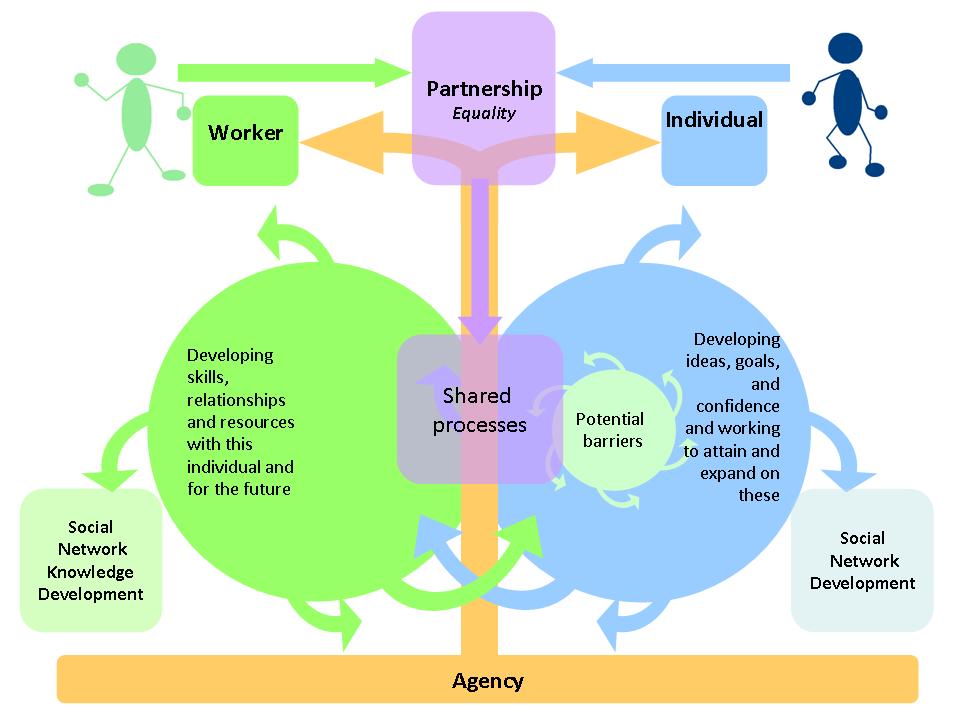
The Connecting People Intervention operates through the principles and practice of co-production. Rather than a traditional model of workers ‘doing’ and individuals ‘receiving’, workers and individuals co-create the objectives and actions together. Decision making is a shared process and both the worker and individual take responsibility for acting upon the decisions made. Both undertake tasks to keep the intervention ‘wheels’ rotating (see figure below). The Connecting People Intervention is a shared journey of discovery with inputs being invested and outcomes being produced for both the worker and the individual. The New Economics Foundation manifesto for co-production provides an excellent and accessible introduction to the concept of co-production and what it means for public services.

The Connecting People Intervention aims to rotate the green and blue wheels in the model. These represent cycles of discovery for both the worker and individual, which result in the development of new social connections and social networks. But before the wheels can start to spin, the worker and individual both need to be prepared to work together. Ideally, the worker needs to have empathy, a ‘can do’ attitude and be a natural networker, while the individual they are working with needs to have some enthusiasm for engaging in this process and to share ownership of it. Both need to be ready to engage in new situations and meet new people.

The Connecting People Intervention model is not a traditional linear process of a worker doing something for or with the individual and an outcome occurring as a result of this. We use the two interlocking circles to represent the fluidity of the process and the uncertainty about when, or if, new social connections are made. However, there are some important tasks to be undertaken at the beginning of the process.

The worker and the individual start by mapping out the individual’s existing social network. This can be done on a piece of paper by using a series of concentric circles. The individual talks about the people in his or her life who they feel closest to (their names go in the inner circles), followed by those they feel less close to (their names go in the outer circles).

Then, both the worker and individual discuss and write down their own strengths, or assets. These may be their interests; things which they – or other people – think they are good at; or their unique qualities. They will draw on these assets throughout the process of the Connecting People Intervention.

Finally, the worker supports the individual to explore their life goals and to discuss what they would like to achieve. The individual needs to be encouraged to think beyond what the service could provide and to consider new opportunities which they had previously not thought possible. Together, the worker and individual select a goal, or a series of goals, to work towards. The shared development of objectives and activities is at the centre of the model because it represents the co-produced activities. When the worker and individual meet for the first time in the context of this model, they discuss the life goals of the individual and they develop a realistic strategy together to help him or her achieve this. The activities which they undertake to achieve these goals may be in the context of what the agency provides or it may be additional to that.

The process of goal attainment is a shared one, as represented by the overlapping blue and green circles. The worker and individual work in partnership. The individual’s journey (represented by the blue circle on the right) is the focus of the intervention process. In achieving his or her goals, the individual is, for example, exposed to new ideas; introduced to new people and activities; and supported to develop skills, interests and social confidence.

The worker’s journey (represented by the green circle on the left) is equally as important in the intervention process as the individual’s. This assumes that the worker will need to develop their own social network knowledge in order to support the individual on their journey. Workers may need to build relationships; foster trust; identify opportunities; engage with the local community of the individual; develop their own networks and resources; adapt to new ideas; and utilise their contacts in the process of supporting the individual they are working with. At any point, they may need to provide extra support or reassess their involvement, while the individual they are working with may need to seek advice from them and develop their own self-awareness of their journey.

The worker needs to look out for barriers which may prevent the individual’s blue wheel from rotating. These work in the opposite direction to the intervention cycle and can pose considerable challenges for some individuals. Barriers may include, for example, stigma; physical health problems; complicated external lives; countervailing attitudes of self and the organisation providing the context for the intervention; ‘bad’ social capital; lack of information; or poor access to services. These barriers will present the worker with a number of challenges, and helping the individual to overcome them are likely to be the most time-consuming element of their work.

The worker-individual dyad described here takes place in the context of a supportive agency. Without a supportive organisational context, the Connecting People Intervention is unlikely to occur. There are a number of features of a supportive agency context including modelling of good practice; skill sharing; community engagement and good local knowledge. The agency can provide a physical environment which facilitates social connections and can provide useful connections with community resources which individual workers may not have. Shared knowledge of the local community and the intervention model held by the agency can prevent interventions failing when workers leave. This can also help to reduce reliance on individual workers who may be the only ones to hold connections within the local community.

The Connecting People Intervention does not specify what the individual and worker should do within this process as it is up to them to co-produce the activities. However, we anticipate that new social connections may be made at any point in this process. The following case study exemplifies how the Connecting People Intervention works:

Simon and Mina

Simon has a good sense of humour and likes to make other people laugh. His new keyworker Mina helped him to recognise that this was a strength and they agreed to work together using the Connecting People Intervention to help him use his humour to make new social connections.

They began by mapping his social network and found that apart from a few family members and friends he had made from within the service, he did not have many social connections. He felt that the people he knew had heard all of his jokes and he wanted to find new outlets for his humour. Simon wanted to do stand-up comedy, but lacked the confidence to do anything about it and did not think that he would be good enough.

Simon and Mina devised a series of smaller goals for Simon to achieve and identified some potential barriers which may need to be overcome to achieve his ultimate goal. Firstly, they thought that social media may be one way for Simon to test out his humour on other people and help his confidence to grow. Mina and Simon both set up accounts on Twitter and learnt to use it together. Mina supported and encouraged Simon to tweet daily jokes and to follow established comedians to learn how they used comedy in everyday online interactions. Simon’s followers slowly grew in number and gave him confidence in his abilities.

Next, both Simon and Mina arranged an ‘open mic’ night in their agency. This provided anyone with an opportunity to perform music, poetry, comedy or any performing art in front of other people (not just those from within the agency). Simon performed a short routine, which was well received.

Finally, Mina encouraged Simon to participate in a small comedy night at his local community centre. Although very anxious about this, he found the encouragement of his Twitter followers and other people within the agency sufficient to encourage him to put himself in the spotlight. He used a familiar routine and he received a similarly positive response.

In addition to the ‘virtual’ social connections Simon made on Twitter, he met people who attended the local community centre and got chatting to them. They have subsequently kept in contact and occasionally meet up at the local café.

Piloting the Connecting People Intervention

This summer we will be piloting the Connecting People Intervention in health and social care agencies in England. We are still looking for agencies to participate in this study, funded by the NIHR School for Social Care Research.

We wish to select teams for the pilot whose practice is already similar to the model as we appreciate it may take some quite a lot of time and resources to adapt to this way of working. To help us select agencies for inclusion in the study, we are inviting all those who are interested to complete a brief questionnaire about their work. The questionnaire is available here in a word document to download and complete. The deadline for the return of this questionnaire has now been extended to Friday 20th April 2012 (my email address is given at the end of the questionnaire).

I look forward to hearing from you soon!